

Custom American Football Uniforms: Complete Buying Guide for USA Teams

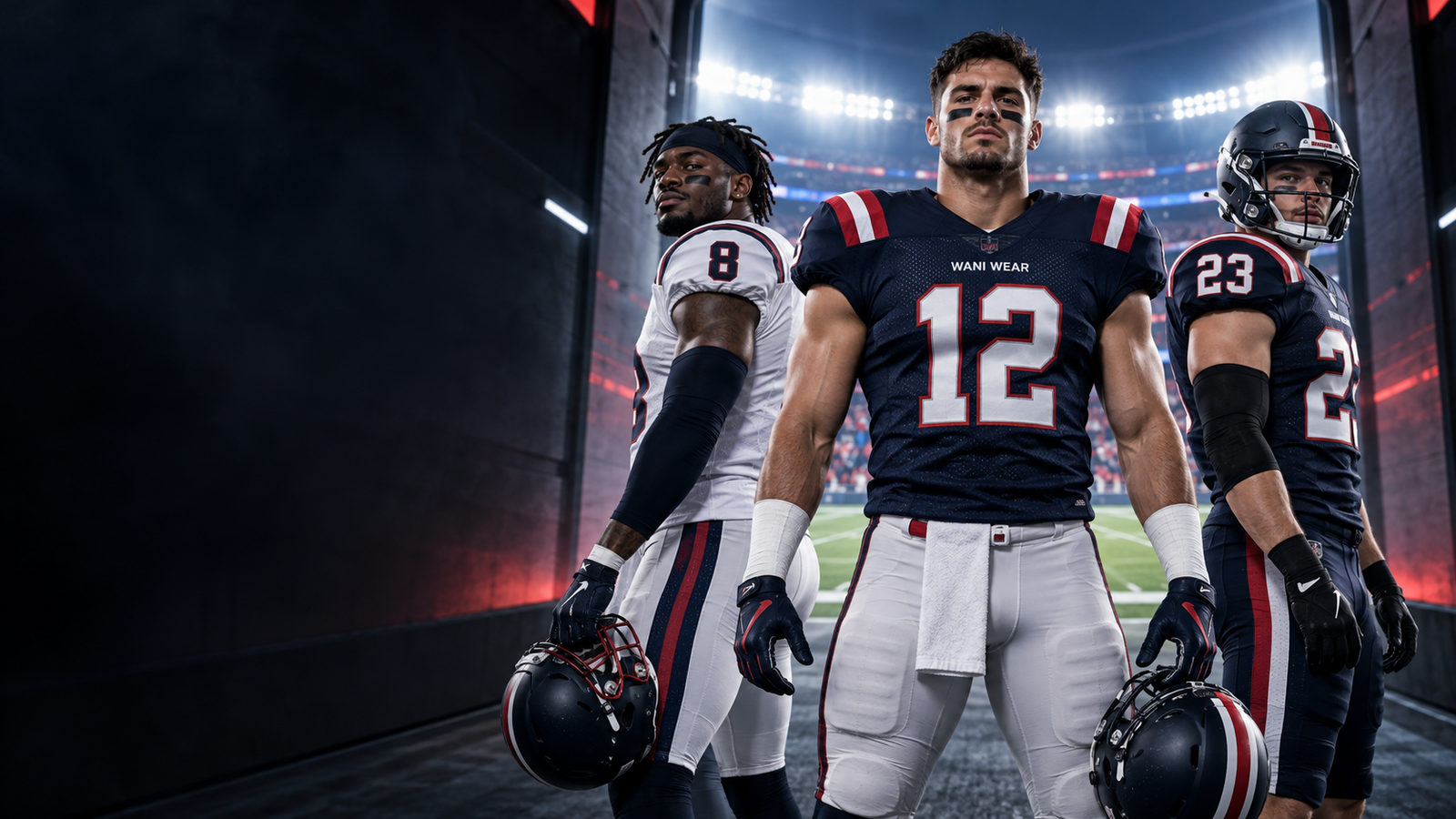
Custom American Football Uniforms: USA Buying Guide
Custom American football uniforms do more than identify players on the field. The right uniform improves comfort, supports unrestricted movement, strengthens team identity, and helps players look unified from warm-up through the final whistle.
For USA schools, youth programs, clubs, leagues, academies, retailers, and private-label sportswear brands, choosing a dependable uniform supplier is a major purchasing decision. Fabric quality, fit, decoration, order accuracy, production capacity, and delivery all affect the success of your season.
This complete buying guide explains how to order custom American football uniforms with confidence—from selecting fabrics and uniform styles to preparing your roster and evaluating a manufacturer.
What Is Included in a Custom American Football Uniform?
A complete American football uniform normally includes:
A custom football jersey
Integrated or standard football pants
Player names and numbers
Team logos and mascots
Conference, sponsor, or memorial patches
Optional socks, compression wear, hoodies, warm-up suits, and team bags
Teams can order matching sets or purchase jerseys and pants separately. A professional manufacturer should also offer youth and adult sizes, custom color combinations, and designs for home, away, and alternate uniforms.
Why USA Teams Choose Fully Custom Football Uniforms
Stock uniforms can work for short-term needs, but they limit a team’s colors, graphics, sizing, and brand presentation. Fully customized uniforms give teams more control.
Build a Strong Team Identity
Custom colors, mascots, typography, sleeve graphics, and player details create a recognizable identity. A consistent look also strengthens the presentation of a school, club, or league in photographs, videos, and social media content.
Improve Player Comfort and Movement
American football requires explosive movement and frequent physical contact. Properly designed jerseys and pants should flex with the player, fit correctly over protective equipment, and release heat during demanding games and practices.
Reduce Cracking and Peeling
Full-dye sublimation permanently infuses artwork into polyester fabric. Because the graphics become part of the material, they do not form a heavy surface layer. This helps prevent the cracking, peeling, and flaking often associated with lower-quality decoration.
Create Retail and Sponsorship Opportunities
A coordinated uniform program can include replica jerseys, coach apparel, fanwear, hoodies, and accessories. Private-label buyers can also add their own brand labels, packaging, and size tags for resale.
Choose the Right Football Jersey Style
The jersey must fit over shoulder pads without feeling excessively loose. Before approving production, teams should decide how the jersey will be worn and what level of play it must support.
Pro-Cut Football Jerseys
Pro-cut jerseys have a close, athletic fit with shorter sleeves and limited loose fabric. They suit competitive teams that want a streamlined game-day appearance. Accurate measurements are essential because the cut is intentionally fitted.
Traditional-Cut Jerseys
Traditional jerseys provide a little more room through the body and sleeves. They are popular with youth teams, schools, training programs, and buyers who need a versatile fit across a larger roster.
Practice Jerseys
Practice jerseys focus on breathability, durability, and value. Mesh panels and simple decoration can make them practical for repeated training sessions. Teams often order practice jerseys in contrasting colors for offense, defense, and quarterbacks.

Performance details such as reinforced seams, breathable mesh, flexible panels, and protective padding improve comfort and durability.
Best Fabrics for Custom Football Uniforms
Fabric selection affects weight, ventilation, print clarity, stretch, and durability. A quality uniform may combine several materials rather than use one fabric throughout the garment.
Polyester Interlock
Polyester interlock has a smooth face and stable construction. It produces sharp sublimated graphics and works well for main body panels. Depending on the desired structure, manufacturers may offer it in light, medium, or heavier weights.
Bird-Eye Mesh
Bird-eye mesh contains small breathable openings that support airflow. It is often used on side panels, underarms, or other high-heat areas.
Heavy Athletic Mesh
Heavy athletic mesh provides a traditional football look and improved ventilation. Teams should confirm that the selected mesh is strong enough for contact use and that printed details remain clear on its textured surface.
Polyester-Spandex Blends
Polyester-spandex fabric adds stretch and recovery. It is especially useful in fitted jerseys, compression areas, and football pants that must move with the player.
Double-Knit Polyester
Double-knit polyester delivers greater structure and durability. It may be used for reinforced panels or football pants where abrasion resistance and shape retention are important.
When comparing suppliers, ask for the fabric composition, GSM range, stretch direction, colorfastness, and intended garment application. A supplier should recommend fabric according to the playing level, climate, budget, and preferred fit—not simply offer the same material for every order.
Sublimation, Embroidery, or Heat Transfer?
Each decoration method serves a different purpose.
Full-Dye Sublimation
Sublimation is ideal for complex patterns, gradients, camouflage effects, multiple sponsor logos, and unlimited color combinations. It keeps the garment lightweight because the design is dyed into the polyester fibers.
Embroidery
Embroidery creates a premium, textured finish for small chest logos, coach apparel, caps, and presentation garments. Large embroidered areas can add weight and stiffness, so placement should be planned carefully on performance jerseys.
Tackle Twill or Appliqué
Tackle twill provides a classic raised appearance for team names and numbers. It is attractive and durable but usually costs more and feels heavier than sublimation.
Heat Transfer
Heat-applied names, numbers, and logos can suit small orders or specific applications. Buyers should ask about wash durability, stretch performance, and the material used before approving this method.
For most fully customized team orders, sublimation offers the best combination of design freedom, comfort, repeatability, and value.

Compare sublimation, embroidery, and heat-transfer options when ordering custom American football uniforms.
How to Select Custom Football Pants
Football pants must balance protection, stretch, and durability. Common options include:
Integrated pants with built-in or removable pad pockets
Non-integrated pants worn with separate pads
Practice pants for repeated training use
Game pants with custom sublimated panels, stripes, or logos
Check the waistband construction, drawcord, belt compatibility, reinforced seams, knee area, crotch gusset, stretch, and pad-pocket placement. Ask whether pads are included, because product descriptions can vary between suppliers.
For youth programs, confirm that the design supports quick dressing and straightforward equipment management. For high school, college, club, and semi-professional teams, prioritize consistent fit, stretch recovery, and reinforcement in high-stress areas.
Getting the Size and Fit Right
Sizing mistakes create delays and can affect player safety and comfort. Never assume that one supplier’s size chart matches another supplier’s chart.
Use these steps before production:
Request the manufacturer’s current youth and adult size charts.
Measure players while accounting for shoulder pads and protective equipment.
Confirm whether the jersey is pro-cut, compression-fit, athletic-fit, or traditional-fit.
Review garment measurements rather than relying only on age or usual T-shirt size.
Order a pre-production sample or sizing set when possible.
Approve any special length, width, or player-specific adjustment in writing.
Keep the approved size chart with your order records. It will make reorders easier and reduce confusion when new players join the roster.
Prepare an Error-Free Team Roster
The roster is one of the most important parts of a custom order. Use a spreadsheet with a separate row for each player and include:
Player name
Jersey number
Jersey size
Pants size
Uniform colorway
Quantity
Special instructions
Check spelling, number duplication, youth versus adult sizing, and capitalization before submission. The buyer and supplier should both approve the final roster before printing begins.
Essential Design Details to Confirm
A production-ready football uniform design should specify:
Exact team colors, preferably with Pantone, CMYK, RGB, or physical references
Front, back, and side views
Team name and mascot placement
Player number size and location
Player name font and position
Sleeve stripes and shoulder graphics
Pant stripes and logo placement
Conference, sponsor, flag, or memorial patches
Collar and cuff style
Fabric and mesh-panel locations
Brand label and packaging requirements
Colors can look different on phones, monitors, printed paper, and fabric. A physical fabric swatch or printed strike-off is the safest choice when color accuracy is critical.
How to Evaluate an American Football Uniform Manufacturer
Price matters, but the lowest quote is not always the lowest total cost. Incorrect sizing, weak stitching, color mismatch, and missed deadlines can become far more expensive than a small difference in unit price.
Look for a manufacturer that offers:
In-House Production
A supplier that manages designing, printing, cutting, stitching, quality control, and packing can maintain better consistency and respond more quickly when adjustments are needed.
Clear Sampling and Approval
Ask for digital mockups, color confirmation, fabric options, and a pre-production sample when appropriate. Production should begin only after the authorized buyer approves the specifications.
Strong Quality Control
Inspection should cover measurements, artwork placement, stitching, color consistency, names, numbers, sizes, quantities, labels, and packing.
Reliable Communication
A good supplier provides clear answers, written specifications, progress updates, and realistic production and shipping estimates. Avoid suppliers that make unclear promises or change materials without approval.
Reorder Capability
USA teams frequently need replacement uniforms or uniforms for new players. Confirm whether the manufacturer saves artwork, color information, size specifications, and roster records for accurate reorders.
OEM, ODM, and Private-Label Support
Retailers, sportswear suppliers, and emerging brands should ask about custom neck labels, woven labels, hangtags, barcodes, poly bags, branded packaging, and design confidentiality.
Questions to Ask Before Placing an Order
Send potential suppliers the same questions so you can compare quotations fairly:
What is your minimum order quantity?
Is the price for the jersey only or the complete uniform set?
Which fabrics and GSM options are included?
Are names, numbers, logos, and unlimited colors included?
Are football pads included with the pants?
Is a sample available, and is the sample fee refundable?
What are the mockup, sample, and bulk-production timelines?
Is shipping included in the price?
Which courier will you use, and is tracking included?
What quality-control checks take place before packing?
How are defects, shortages, or incorrect customizations handled?
Can you produce small repeat orders using the same artwork and colors?

Essential components of a custom football uniform, including a jersey, integrated padded pants, helmet, gloves, socks, and compression layer.
Understanding MOQ, Pricing, and Lead Time
The final cost of a custom football uniform depends on quantity, fabric, jersey cut, pants construction, decoration method, customization, labels, packaging, sample requirements, and shipping destination.
A low minimum order quantity helps new clubs, small schools, travel teams, and test buyers. Larger orders normally achieve a better unit price because setup and development costs are spread across more garments.
Always separate these timeframes:
Design time: artwork preparation and mockup revisions
Sample time: material sourcing, printing, cutting, and sewing one approval piece
Production time: bulk manufacturing after final approval
Shipping time: courier transit and customs processing
Place seasonal orders early. Build extra time into the schedule for roster changes, sample revisions, holidays, courier delays, and customs clearance.
A Simple Ordering Process for USA Teams
Step 1: Send Your Requirements
Share your uniform style, team colors, logos, roster, size breakdown, quantity, delivery location, and required date.
Step 2: Review the Quotation
Confirm exactly what the price includes: garment pieces, fabrics, customization, labels, sample charges, packaging, shipping, and any taxes or duties.
Step 3: Approve the Digital Mockup
Check spelling, colors, logos, number placement, uniform views, and pant design. Ask for revisions before approval.
Step 4: Approve the Sample
For a new supplier or complex design, inspect the sample’s fit, fabric, stitching, color, print quality, and overall appearance.
Step 5: Confirm the Final Roster
Freeze the roster and size breakdown before bulk printing. Late changes may create extra costs or delays.
Step 6: Bulk Production and Quality Inspection
The manufacturer prints, cuts, stitches, finishes, inspects, and packs the order according to the approved specifications.
Step 7: Shipping and Delivery
Request the tracking number, packing list, carton count, and final order photos. Check all items immediately after delivery.
Common Buying Mistakes to Avoid
Ordering by price without comparing fabric and construction
Approving artwork without checking every name and number
Using screen colors as the only color reference
Ignoring the difference between youth and adult sizing
Failing to confirm whether pads and shipping are included
Placing the order too close to the first game
Skipping the sample for a new or complex design
Choosing a supplier without a written defect or remake policy
Forgetting to plan for replacement players and future reorders
Why Partner With WANI WEAR?
WANI WEAR is a custom sportswear manufacturer based in Sialkot, Pakistan, serving teams, clubs, academies, leagues, retailers, distributors, and private-label brands. We manage the complete production process—from design and sublimation printing to cutting, stitching, quality inspection, and packing.
Our custom American football uniform service includes:
Fully customized jerseys and football pants
Youth and adult sizing
Custom team colors, names, numbers, logos, and patterns
Sublimation, embroidery, and private-label options
OEM and ODM manufacturing support
Low minimum order quantities
Digital mockups and sample development
Worldwide shipping through leading courier services
Whether you need uniforms for a youth league, high school, college club, semi-professional team, sports retailer, or growing apparel brand, WANI WEAR can help you develop a coordinated uniform program built around your requirements.
Frequently Asked Questions
What is the best fabric for an American football uniform?
The best choice depends on the garment area and level of play. Polyester interlock offers a smooth printing surface, mesh supports ventilation, double-knit fabric adds structure, and polyester-spandex blends provide stretch. Many high-quality uniforms combine two or more fabrics.
Is sublimation suitable for contact football?
Yes. Sublimation creates lightweight, permanent graphics on polyester fabric. The design will not crack or peel like a thick surface print, although the garment’s overall durability still depends on fabric, stitching, construction, and care.
Can every player have a different name and number?
Yes. Custom names, numbers, sizes, and player-specific details can be produced from an approved roster.
Can I order youth and adult sizes together?
Yes. Teams can normally combine youth and adult sizes in one order. Review the manufacturer’s exact size chart before confirming quantities.
Can retailers add their own private label?
Yes. WANI WEAR supports private labels, woven tags, size labels, hangtags, branded packaging, and other OEM requirements.
How early should a team order uniforms?
Order as early as possible before the season. Your schedule should include design revisions, sample approval, bulk production, shipping, customs, and time to resolve unexpected changes.
Order Custom American Football Uniforms for Your Team
The best football uniform program starts with clear specifications, correct sizing, approved colors, an accurate roster, and a manufacturer that communicates throughout production. Taking time to compare fabrics, construction, decoration, sampling, and reorder support will protect your budget and help your team enter the season with confidence.
Contact WANI WEAR to request a custom American football uniform mockup and quotation for your school, club, league, store, or private-label sportswear brand.
Email: waniwears@gmail.com
WhatsApp: +92 336 1544421
Website: waniwears.com
MOQ: 10 pieces
Worldwide shipping available

