
 Kip Leather Baseball Gloves
Best Fabric for Baseball Uniforms: A Practical Buyer’s Guide

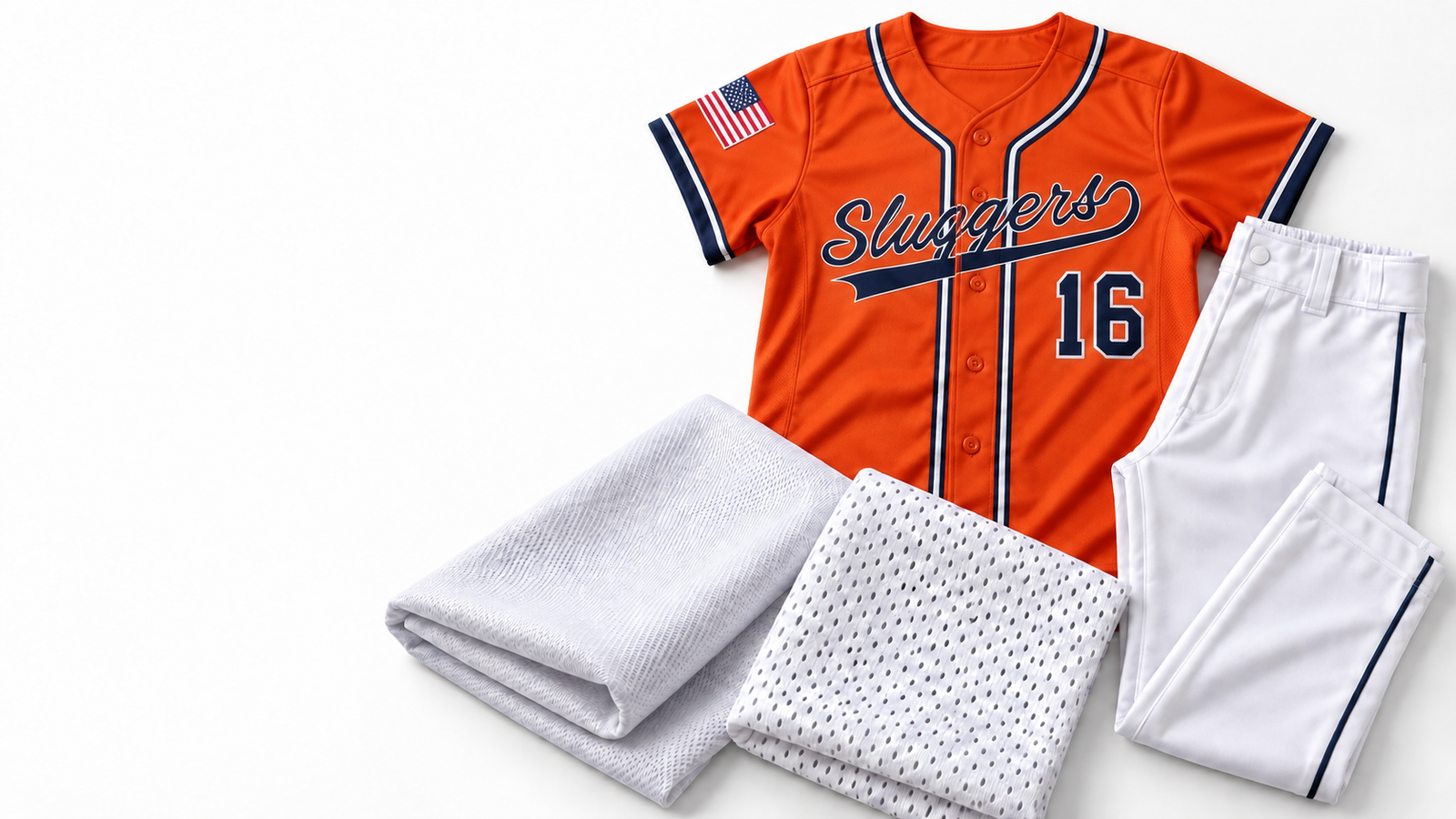
How to Choose the Best Fabric for Baseball Uniforms
For most teams, the best fabric for baseball uniforms is a performance polyester knit. That usually means a smooth polyester interlock or a lightweight mesh for jerseys, and a heavier, stretchy double-knit polyester for pants. Polyester holds its shape, dries quickly, stands up to frequent washing, and takes dye sublimation well.
“Polyester” alone isn’t a specification, though. Knit structure, weight, stretch, and finish all change how a uniform looks, feels, and lasts. This guide shows buyers how to compare those options and how to confirm the details before a bulk order.
Why Polyester Knits Lead in Modern Baseball Uniforms
Baseball is hard on a uniform. Players spend hours in the sun, slide through dirt, and dive for balls. Teams also wash uniforms after nearly every game.
Synthetic knits handle these demands better than traditional cotton. Polyester fibers absorb very little water, so the fabric generally dries faster and keeps its shape. Polyester is also the fiber that sublimation dyes bond with. That’s why most sublimated team uniforms start with it.
How to Choose Baseball Jersey Fabric
A jersey needs to be breathable, comfortable across the shoulders, and a good surface for your graphics. These are the main options.
Polyester Interlock
Interlock is a double-knit structure with a smooth face on both sides. It has a clean, premium look, a soft hand feel, and moderate stretch. Its smooth surface makes interlock a strong choice for full sublimation, where fine lines and gradients need to print sharply. It suits most competitive teams and is a dependable all-around option.
Polyester Mesh
Mesh has visible holes that let air move through the fabric. Tight pinhole mesh and microfiber mesh breathe well and still print cleanly. Open mesh vents the most air but shows fine print detail less crisply and can snag more easily.
Mesh is a common choice for side panels, underarm gussets, and back yokes. A whole mesh jersey works well for hot climates or practice wear.
Polyester-Spandex Blends
Adding a small percentage of spandex (elastane) gives the fabric more stretch and recovery. That helps with throwing and batting motions and with slimmer athletic fits. Stretch fabrics can cost more, and the spandex content affects how well the fabric tolerates heat during printing, so ask your manufacturer how their blend performs under sublimation.
Poly-Cotton and Cotton
Cotton and cotton-rich blends feel familiar and soft. They also absorb sweat, dry slowly, and don’t sublimate well. They work for fan jerseys, casual team tees, or retro-style apparel, but performance polyester is usually the better choice for game uniforms.

How to Choose Baseball Pants Fabric
Pants take more abuse than jerseys. Sliding, kneeling, and dirt all put stress on the knees and seat. For that reason, most baseball pants use a heavier double-knit polyester, often with added stretch.
Look for these features:
- Weight and density that resist abrasion without feeling stiff
- Stretch in both directions for squatting and running
- Reinforced knees or double-layer panels at high-wear points
- Color options that match your jerseys and can be reproduced on reorder
White and gray pants show every stain, so ask how the fabric handles stain removal and repeated washing. For pinstripes, piping, or sublimated side panels, confirm that the pants fabric can take that decoration.

Baseball Uniform Fabric Comparison Table
| Fabric | Breathability | Feel | Stretch | Durability | Sublimation | Best use |
|---|---|---|---|---|---|---|
| Polyester interlock | Good | Smooth, soft | Moderate | High | Excellent | Game jerseys |
| Pinhole/micro mesh | Very good | Light, textured | Moderate | Good | Very good | Jerseys, panels, hot climates |
| Open mesh | Excellent | Airy, textured | Moderate | Moderate (can snag) | Fair for fine detail | Vent panels, practice |
| Poly-spandex blend | Good | Soft, stretchy | High | High | Good (confirm blend) | Athletic-fit jerseys, pants |
| Double-knit polyester | Moderate | Substantial | Moderate to high | Very high | Good | Baseball pants |
| Poly-cotton / cotton | Moderate | Soft, familiar | Low | Moderate | Poor to limited | Fan and casual wear |
Ratings are general comparisons. Actual performance depends on the specific fabric, weight, and finish, so always test samples.
What GSM Means and Why No Single Weight Is Best
GSM stands for grams per square meter. It measures a fabric’s weight. A higher GSM usually means a denser, heavier fabric, but knit structure also affects how breathable and durable a fabric feels. Two fabrics with the same GSM can perform very differently.
No single GSM is best for every uniform. Match the weight to how the uniform will be used.
Hot-Weather Play
For summer leagues and warm regions, choose lighter jersey fabrics and add mesh panels where heat builds up. Pants still need enough weight to hold up to sliding.
Youth Teams
Young players need comfort and easy care. A lighter, soft-handed jersey fabric usually works well. Size ranges and room for growth often matter more to a youth program than a premium fabric does.
Frequent Washing and Repeat Orders
Uniforms washed several times a week need fabric with good color fastness, low pilling, and minimal shrinkage. If you place repeat orders, record the exact fabric name, composition, and GSM. That way next season’s replacement pieces will match the ones your players already wear.
Fiber vs. Finish: What “Moisture-Wicking” Really Means
Not every polyester fabric wicks moisture well. Wicking depends on the yarn and knit construction, and many fabrics also get a chemical finish that helps them spread and release sweat.
The difference matters. Some finishes can fade after repeated washing, and fabric softeners may reduce their effect. When a supplier describes moisture-wicking baseball uniforms, ask whether the performance comes from the yarn, the knit, a finish, or a combination. Then wash-test a sample yourself.
The same caution applies to anti-odor, UV-protection, and quick-dry claims. Ask what treatment was used and whether any supporting test data exists.
Choosing Fabric for Sublimated Baseball Jerseys, Logos, and Numbers
Dye sublimation uses heat to turn dye into a gas that bonds with polyester fibers. The design becomes part of the fabric, so it won’t crack or peel. That makes sublimated baseball jerseys popular for full-color designs, gradients, and pinstripe patterns.
Keep these fabric points in mind:
- Polyester content matters. A higher polyester content generally produces brighter, sharper prints. Blends with a lot of cotton print duller and can fade.
- Start with a light base fabric. Sublimation dyes are translucent, so designs are printed on white or light fabric. You can’t sublimate a light color onto a dark fabric.
- Surface texture affects detail. Smooth interlock holds fine lines better than open mesh.
- Coatings can interfere. Some finishes can keep dye from bonding properly, so confirm the fabric is suited to sublimation.
Names and numbers need the same attention. Tackle twill and embroidery need fabric stable enough to stitch without puckering. Heat-applied numbers on dyed polyester can suffer from dye migration, where fabric color bleeds into a light number. Ask your manufacturer which transfer materials they use to prevent this.
For color consistency, approve a printed strike-off before bulk production. The same design can look different on different fabrics, so reorder on the same fabric you approved.

Buyer Checklist: Samples and Specs Before Bulk Production
Before you approve a bulk order, confirm these points in writing:
- Fabric composition, such as 100% polyester or a polyester-spandex blend with the percentages listed
- Knit type: interlock, pinhole mesh, open mesh, or double knit
- GSM for each part of the uniform, including jersey body, panels, and pants
- Finishes or treatments and what each is meant to do
- Decoration method for logos, names, and numbers
- A physical fabric swatch or pre-production sample
- A sublimation strike-off showing your real colors on the actual fabric
- Wash test results from your own test: check shrinkage, color loss, and pilling after several washes
- Size chart and fit sample for adult and youth sizes
- Reorder details, including fabric code and color references, stored for future seasons
A clear spec sheet prevents disputes and makes repeat orders much easier.
Custom Baseball Uniforms from WANI WEAR
WANI WEAR is a custom sportswear manufacturer and exporter based in Sialkot, Pakistan. We produce custom baseball uniforms for clubs, academies, leagues, teamwear brands, retailers, and wholesalers.
We offer:
- OEM manufacturing to your specifications
- ODM development if you need help with design and fabric selection
- Private-label production for brands selling under their own name
- Sublimation and embroidery for logos, names, and numbers
- A 10-piece minimum order quantity, which suits small teams and trial orders
- Worldwide shipping via DHL, FedEx, and UPS
We can walk you through fabric options, send swatches, and prepare samples so you can evaluate the uniform before you commit to a full order.
Frequently Asked Questions
What is the best fabric for baseball jerseys?
For most teams, polyester interlock or a fine polyester mesh. Interlock gives a smooth, premium finish, and mesh adds airflow for hot weather.
What fabric are baseball pants made of?
Most baseball pants use heavier double-knit polyester, often with stretch. Many add reinforced knees for sliding.
Are mesh baseball jerseys better than interlock?
Neither is better overall. Mesh breathes more, while interlock prints finer detail and looks cleaner. Many jerseys combine an interlock body with mesh panels.
Can you sublimate on cotton baseball jerseys?
Not effectively. Sublimation dyes bond with polyester, so cotton-rich fabrics produce faded, less durable results.
What GSM should I choose for baseball uniforms?
It depends on climate, age group, and use. Lighter fabrics suit hot weather and youth players, while pants need more weight for durability. Compare samples rather than picking a number alone.
Do all polyester uniforms wick moisture?
No. Wicking depends on yarn, knit construction, and any added finish. Ask your supplier how the fabric achieves it and test a sample.
How do I keep colors consistent across repeat orders?
Approve a strike-off, record the fabric code and color references, and reorder on the same fabric.
Request Fabric Samples or a Quote
Choosing baseball uniform fabric is easier when you can see and feel the options. Contact WANI WEAR to request fabric swatches, a pre-production sample, or a quotation for your custom baseball uniforms. Tell us your team size, climate, design, and decoration needs, and we’ll recommend fabrics that fit.


